INVAPACT
InvaPact, a quantitative metric for ecological impacts of biological invasions
Biological invasions are one of the major direct drivers of global biodiversity loss, yet their ecological impacts remain exceptionally difficult to quantify and compare.
An invasive species may reduce the abundance of a native population, alter community composition, disrupt nutrient cycling, modify fire regimes or transform the physical environment. These impacts differ in nature, scale and severity, and have historically been described using heterogeneous concepts and methodologies.
As a result, invasion science has lacked the equivalent of a common quantitative currency: a standardized measure allowing very different ecological impacts to be compared on the same scale.
InvaPact was developed to fill this gap
Coordinated at CNRS – Université Paris-Saclay, InvaPact combines a standardized typology of ecological impacts, an extended impact-classification framework, global expert consensus and a new quantitative metric to express invasion impacts on a simple 0–100 scale.
The project now brings together more than 180 researchers from 55 countries, making InvaPact a truly global collaborative effort.
Contents of this page
– How InvaPact was built: from InvaCost to four international workshops
– Building the metric: simple, yet robust and universal
– The Type of impacts: what has changed, and how important is it?
– The Severity of impact: how grave is the impact, contextually?
– The InvaPact metric: combining Type and Severity
– From a metric to a global database: anything becomes possible now
– What can one do with a common quantitative currency?
– A global collaborative effort: collaborative science
– Applications : from global science to operational management
How InvaPact was built: from InvaCost to four international workshops
InvaPact did not emerge from a single paper or a single research group. It is the result of a long collaborative process combining conceptual ecology, international workshops, database development and artificial intelligence.
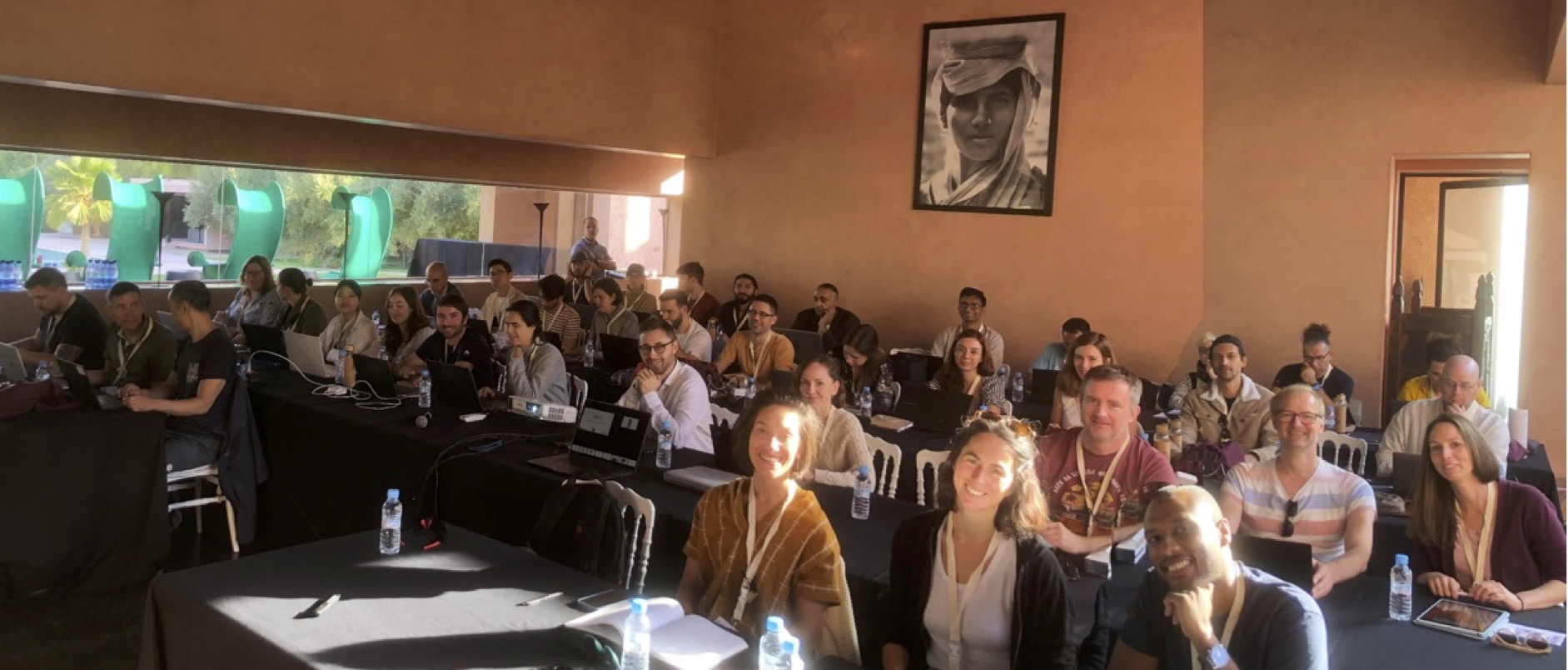
Participants to the second InvaCost interdisciplinary workshop, in Marrakech, Morocco, Nov 2022
The roots: InvaCost
The story began with InvaCost, launched in 2014 to collect, standardize and analyse the economic costs of biological invasions worldwide. By translating highly heterogeneous impacts into a common monetary currency, InvaCost demonstrated how standardisation could unlock comparisons at global scale.
By 2019, the first standardized InvaCost database had been developed and the first international, interdisciplinary workshop brought researchers from 27 countries together to analyse it near Paris. The success of this approach reinforced a much more ambitious idea: could the ecological impacts of biological invasions also be translated into a common quantitative currency?
Ecological impacts represented a much greater challenge. Unlike monetary costs, they range from changes in individual behaviour to population declines, species extinctions, altered food webs, modified nutrient cycles or transformations of the physical environment.
For decades, standardising all of these effects appeared impossible. It was considered the Holy Grail of invasion science.
InvaPact I — Avignon, France, 2023: designing the impossible metric
In October 2023, 50 invasion scientists met in Avignon, France, for the first InvaPact workshop.
The objective was deliberately ambitious: to determine whether fundamentally different ecological impacts could be represented within one coherent framework and ultimately compared quantitatively.
Through 9 days of intensive interdisciplinary discussions, creative exercises, working groups and repeated testing of real examples, the workshop established the conceptual foundations of InvaPact. This work led to the standardized typology of impacts and the foundations of the quantitative metric.
A short video from the first InvaPact workshop is available here:
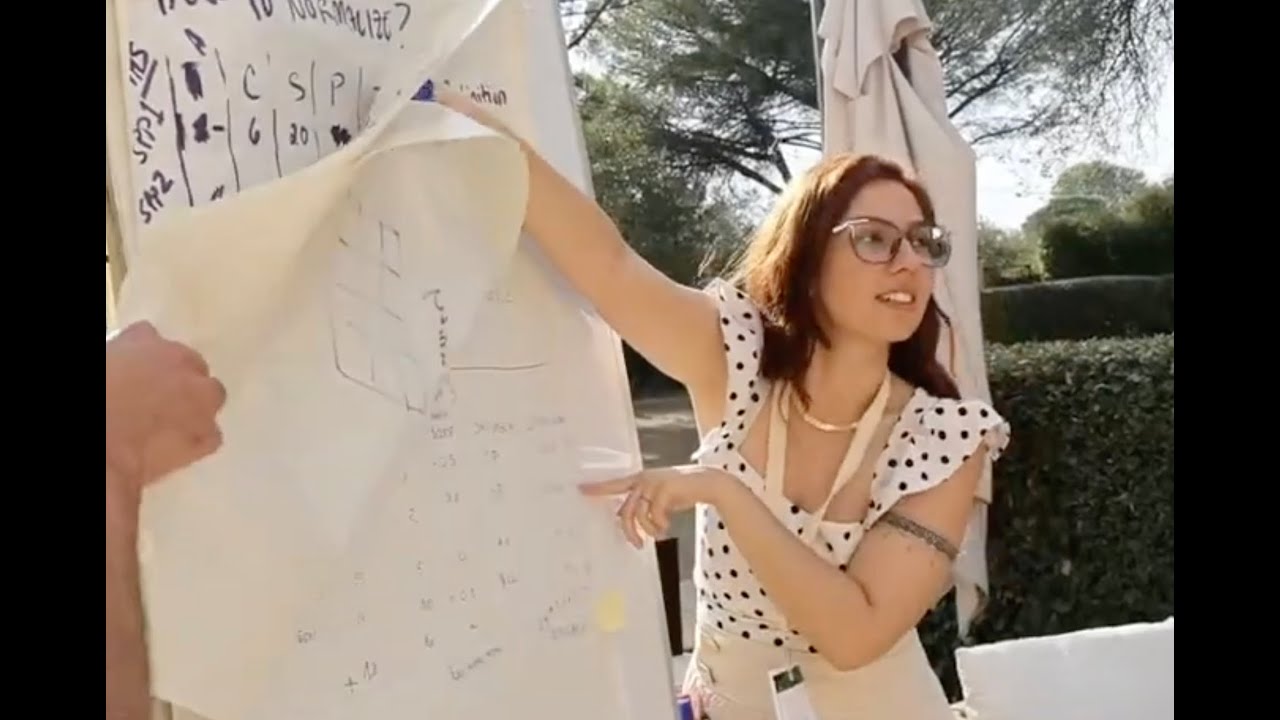
InvaPact II — Université Paris-Saclay, France, 2024: from concept to large-scale data
The second InvaPact workshop took place over three weeks at Université Paris-Saclay in autumn 2024.
By then, the conceptual metric had progressed substantially. The new challenge was scale: applying such a detailed framework manually to the enormous scientific literature on biological invasions would require an unrealistic amount of human work.
InvaPact II therefore focused strongly on the development and refinement of automated extraction of ecological impact data, while also testing the metric on a proto-database generated from approximately 5,000 scientific studies.
This phase progressively evolved into FastMind, our Large Language Model-based scientific data-mining pipeline.
InvaPact III — Girona/Barcelona region, Spain, 2025: analysing the global database
By 2025, the challenge had changed again. The conceptual framework existed, the AI extraction pipeline had reached operational scale, and the database was rapidly growing.
The InvaPact III workshop was therefore designed primarily as a datathon.
Held in northern Spain near Girona and Barcelona in November 2025, the workshop brought together 60 participants, while more than 80 colleagues from previous workshops had been involved in the broader programme.
Participants collectively analysed the database, started developing a shared library of analytical scripts, and committed to a large portfolio of taxonomic, geographic, ecological and conceptual studies.
InvaPact IV — Beijing, China, 2025: expanding the global collaboration
Only a few weeks later, a fourth InvaPact workshop was organised in Beijing in collaboration with Chinese colleagues.
China has an exceptionally active invasion-science community and a large body of high-quality scientific literature in Chinese language, that is not represented in most global syntheses. InvaPact IV therefore had two complementary objectives: to analyse the global InvaPact database and to strengthen its coverage by incorporating information extracted from the Chinese scientific literature.
Rather than creating separate European and Chinese projects, the objective was explicitly to maintain a single international InvaPact consortium, encouraging joint study leadership and collaborations across the two last workshops.
From four workshops to one global programme
These four successive workshops transformed InvaPact from an apparently impossible idea into a collaborative global programme involving more than 180 researchers from 55 countries.
This collective process is as important to InvaPact as the metric itself: the framework was not designed in isolation, but progressively built, challenged and refined by a broad international community.
Building the metric: simple, yet robust and universal
Developing a meaningful quantitative measure first requires answering several different questions.
What type of ecological change has occurred? How ecologically important is that type of change? How severe was the observed impact? And how can these components be combined into a single comparable score?
InvaPact addresses these questions through four complementary components.
1 – A standardized typology: What happened?
A major conceptual difficulty in invasion biology has been the frequent confusion between the mechanism producing an impact — such as predation or competition — and the ecological consequence of that mechanism.
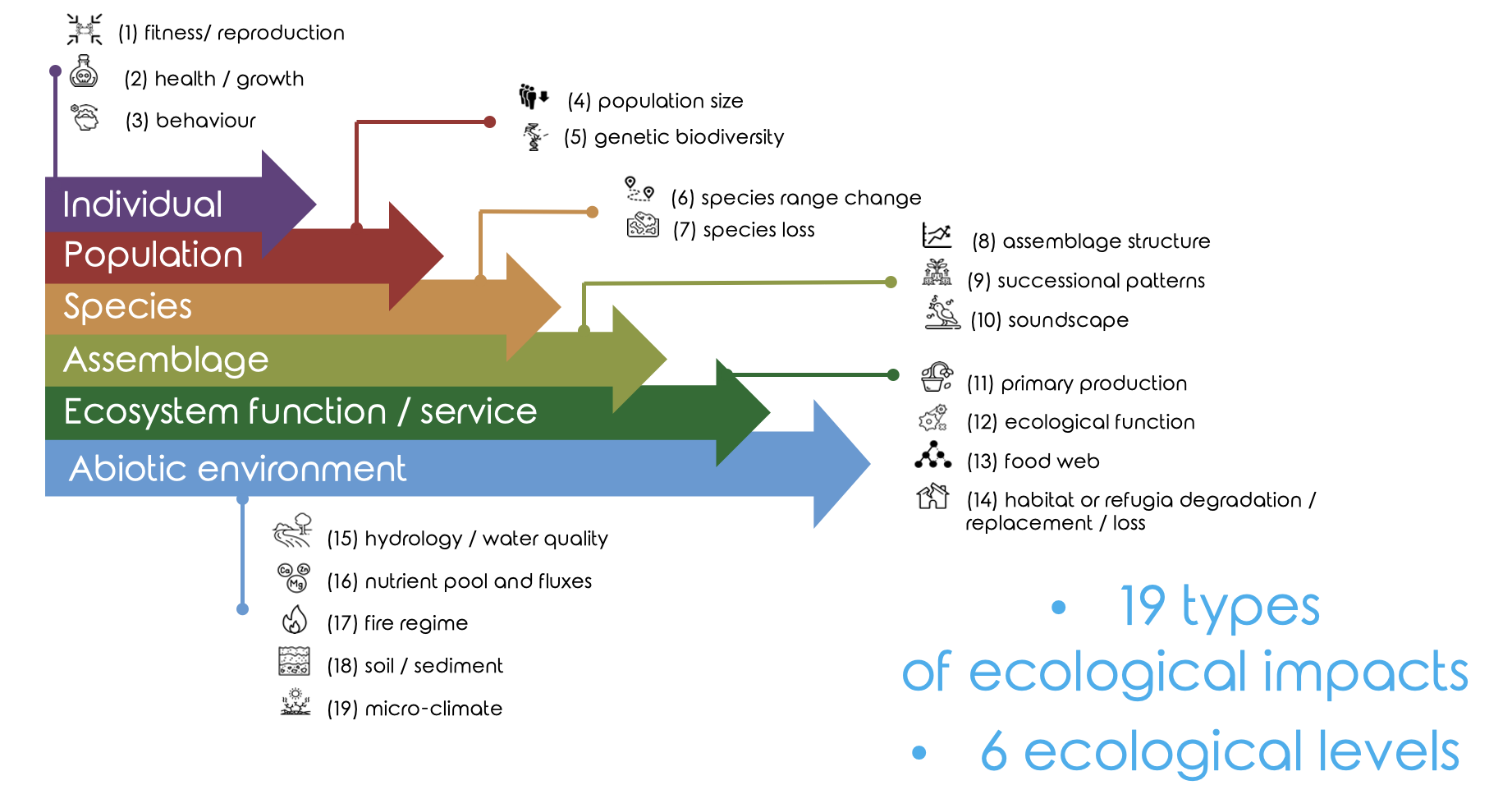
The InvaPact typology separates these concepts and identifies 19 distinct types of ecological impacts across six levels of ecological organisation:
– individuals;
– populations;
– species;
– assemblages;
– ecosystem functions;
– the abiotic environment.
This provides a common language for impacts ranging from altered individual behaviour to species loss, community restructuring, disrupted ecosystem functioning or changes in physical environmental conditions.
This component has been published in Trends in Ecology & Evolution:
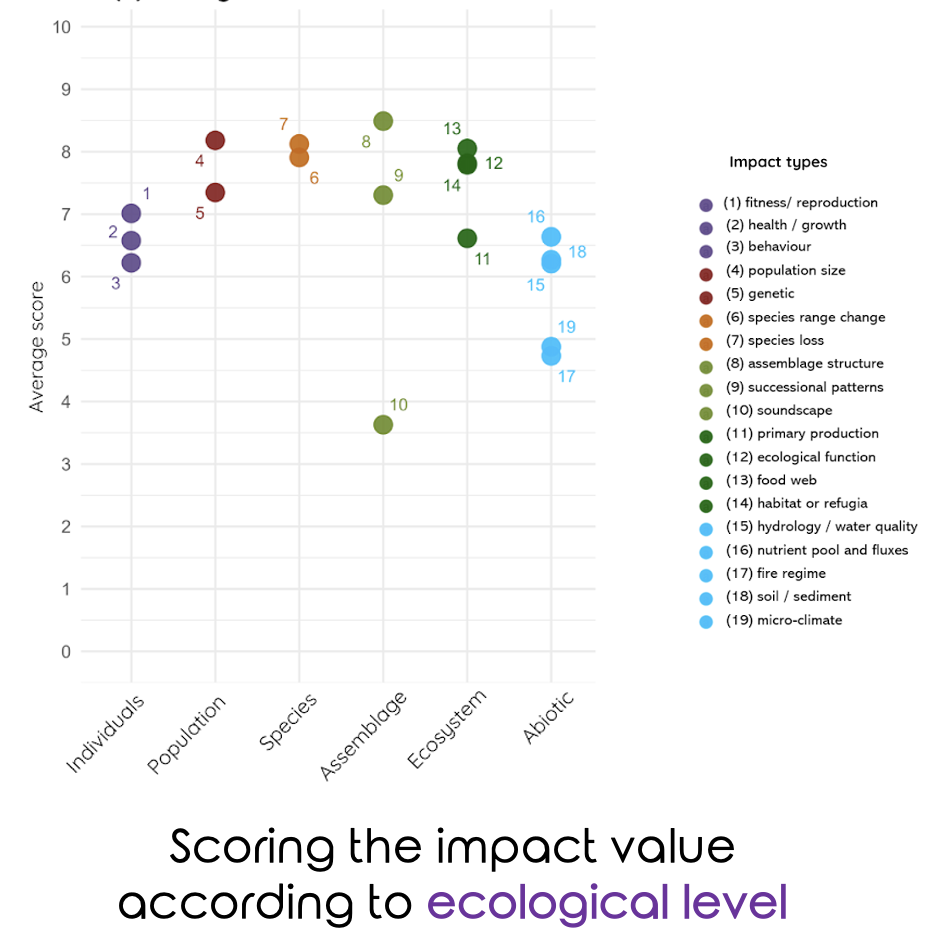
2 – The Type component: what has changed and how important is it?
Not all ecological changes have the same significance.
A local modification of an abiotic variable, for example, cannot automatically be considered equivalent to the disappearance of a native species. InvaPact therefore includes a Type value, T, representing the relative ecological importance attributed to different impact types.
To derive this component, we surveyed more than 400 international experts in invasion science, asking them to evaluate the relative importance of ecological consequences represented in the typology.
This provides an empirically derived expert-consensus weighting rather than assigning arbitrary values to ecological impacts.
The study establishing this component has been published in PLoS One:
3 – The Severity component: how grave is the impact, contextually?
The second dimension of the metric is Severity, S: how severe was the documented ecological change? It is therefore entirely contextual.
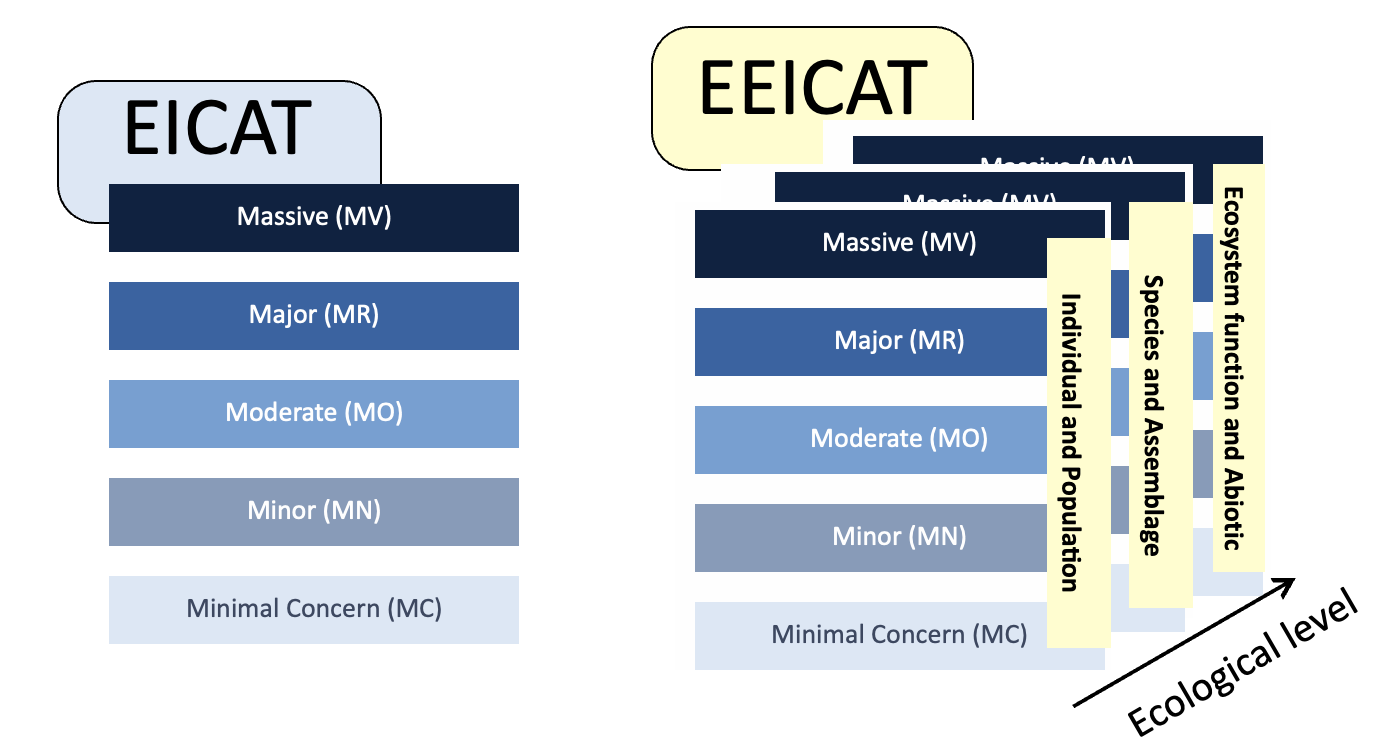
InvaPact builds on EICAT, the IUCN framework for classifying environmental impacts of alien taxa, but extends impact assessment beyond its traditional emphasis on native populations, to encompass assemblages and ecosystems.
The resulting framework, EEICAT — Extended Environmental Impact Classification for Alien Taxa — explicitly incorporates three ecological dimensions and impacts extending from individuals to ecosystem functions and the abiotic environment. It thus allows to assess the severity of all impacts of invasive species that typically have effect beyond native populations (e.g., bivalves, plants, etc).
Like EICAT on which it is based, impacts are assigned to five magnitude categories, from Minimal Concern to Massive, while retaining information on the ecological level at which change occurs.
An important principle is that EEICAT is impact-based rather than species-based. A species is not reduced to its maximal recorded severity value. Individual documented invasion events are evaluated in their ecological context, allowing the same alien species to generate different impacts in different places or circumstances. These impacts values can then be aggregated, across space, time or invasive taxa.
EEICAT has been published in PLoS Biology:
4– The InvaPact metric: combining Type and Severity
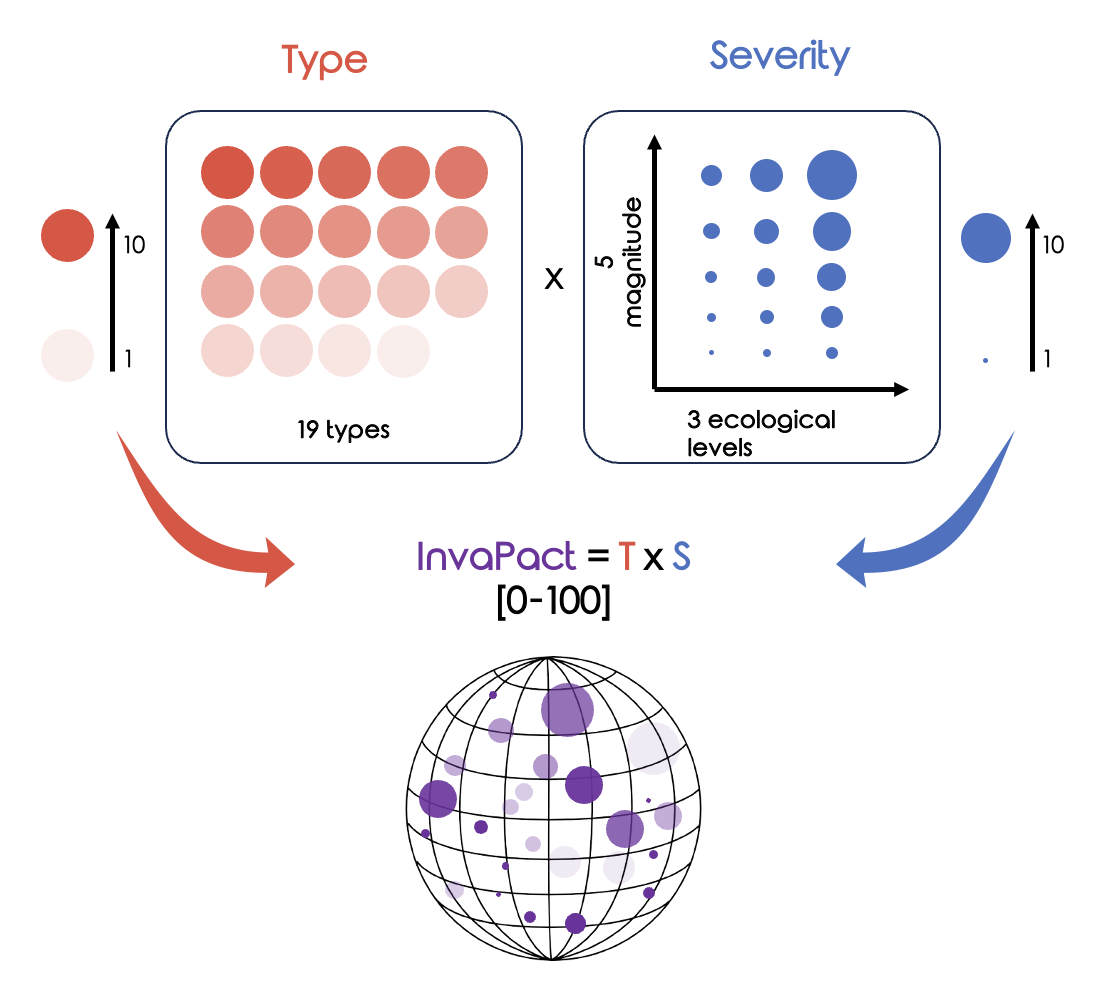
The final step is to combine these two complementary dimensions into a single quantitative value.
The InvaPact score, I, integrates:
– T — Type: the context-dependent ecological importance of the type of impact; It is the intrinsic but subjective value experts attribute to each impact type. It shows, for exemple, whether we consider a change of behaviour more or less important than a change in population extinction.
– S — Severity: the empirically documented magnitude and ecological scope of that impact. It is contextual, but measurable. It shows, for example, how severe is the invasion of the Argentine ant in Italy, or in Spain.
Each of these two components are measured on a [0-10] scale. Combined and rescaled, they produce a unitless standardized score ranging from 0 to 100.
This creates a common quantitative currency while preserving the ecological meaning of the underlying observations.
An InvaPact value therefore does not simply indicate that an invasive species has an impact. It expresses how important the type of ecological change is and how severe that particular documented impact is.
The manuscript describing the complete InvaPact metric is currently under revision at Ecology Letters.
From a metric to a global database: anything becomes possible now
A metric becomes especially powerful when it can be applied systematically to global scientific evidence.
The ecological impacts of invasive alien species are documented across thousands of publications, but relevant information is dispersed through unstructured scientific text and reported using highly variable terminology.
To overcome this second bottleneck, we developed FastMind, a Large Language Model-based pipeline designed to extract complex ecological information automatically from scientific documents.
FastMind extracts approximately 55 ecological parameters describing each documented impact and converts them into standardized database fields.
This approach has allowed us to assemble nearly 160,000 documented ecological impacts from approximately 14,000 scientific publications, creating an unprecedented global evidence base for biological invasions.
Together, InvaPact provides the quantitative framework, while FastMind provides the capacity to apply it at global scale.
What can one do with a common quantitative currency?
By translating heterogeneous ecological impacts onto the same standardized scale, InvaPact makes analyses possible that were previously extremely difficult or impossible to conduct consistently.
Potential applications include:
– comparing invasion impacts across taxa, ecosystems and geographic regions;
– identifying the invasive alien species associated with the most severe documented ecological impacts;
– identifying global impact hotspots;
– comparing the consequences of different mechanisms of invasion;
– testing how impacts change through time or across environmental contexts;
– examining which native taxa, ecological functions or environments are most strongly affected;
– relating ecological impacts to economic costs through comparisons with InvaCost;
– improving prioritisation for research, monitoring, prevention and management;
– developing quantitative indicators for biodiversity assessment and reporting.
Because the metric is based on individual documented impacts rather than a permanent label attached to a species, these analyses can retain the essential context dependence of biological invasions while still permitting standardized comparisons.
A global collaborative effort: collaborative science
InvaPact is the result of more than four years of collaborative research coordinated by Franck Courchamp at CNRS – Université Paris-Saclay. It brings together more than 180 researchers from 55 countries, including specialists in invasion biology, population, community and ecosystem ecology, macroecology, statistics, modelling, data science and artificial intelligence.
Its conceptual foundations were developed through four successive international InvaPact workshops in France, Spain and China, complemented by continuous collaborative work between workshops.
This geographical and disciplinary diversity is essential. A metric intended to compare invasion impacts globally cannot be designed around the ecological realities of only a few regions, taxa or research traditions.
The workshop series was therefore deliberately designed to expand the network progressively, involve new generations of researchers and increase representation from countries and regions traditionally underrepresented in invasion biology.
The InvaCost/InvaPact philosophy is based on collaboration rather than competition: sharing methods, scripts, expertise and study leadership so that the database becomes a collective scientific resource rather than the product of a closed research group. It is also based on inclusivity, with about 75% of participants to workshops being early career, with a gender ratio of about 50% women, and with an avoidance of representation of occidental countries.
The objective is not only to produce a metric, but to build a shared international framework that can be tested, challenged, improved and applied by the global invasion-science community.
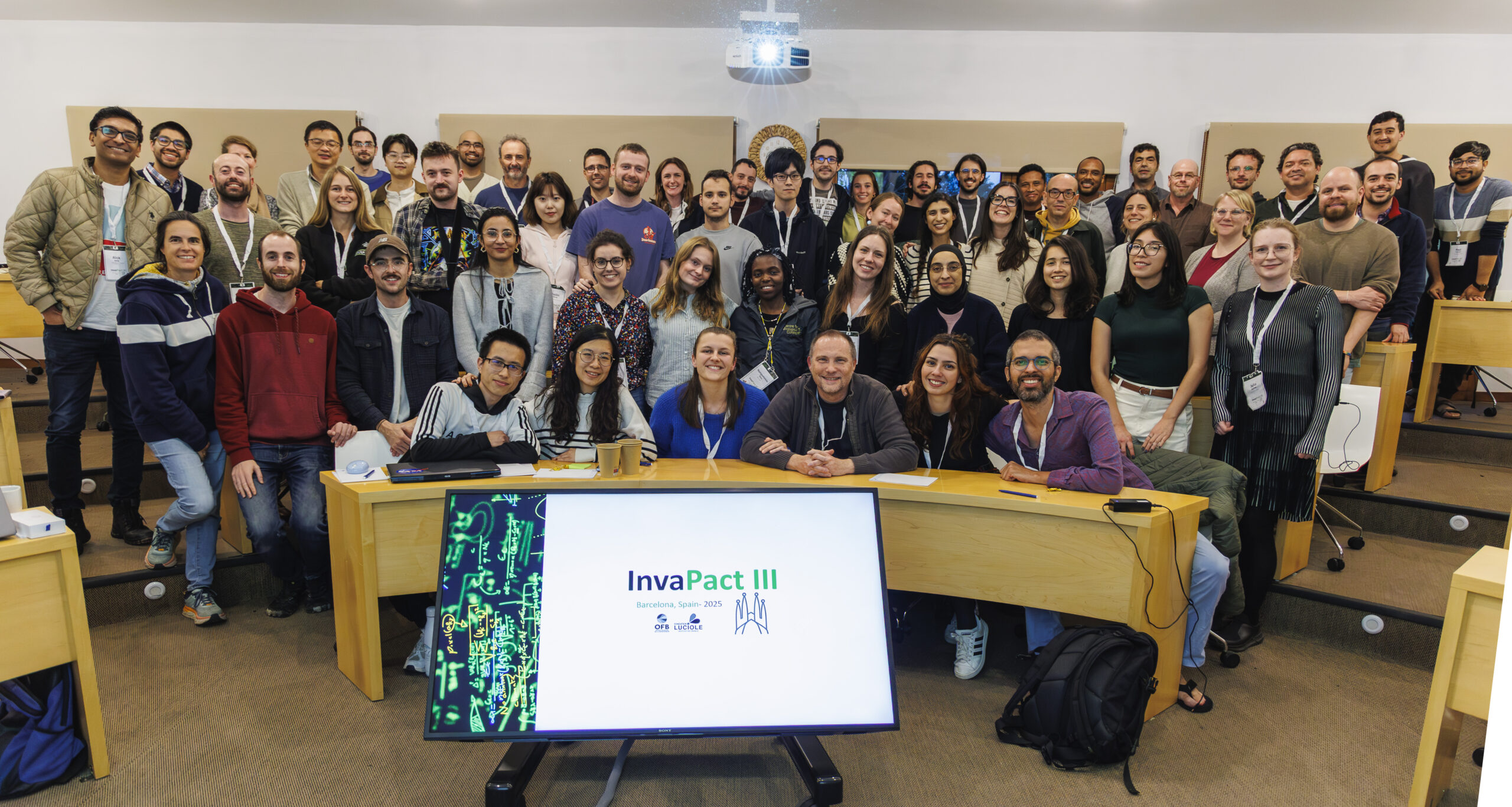
Invapact III Franck Courchamp Catalogne novembre 2025.
Photo de groupe des participants
From global science to operational applications
Although InvaPact was developed as a fundamental research programme, a standardized quantitative metric also creates opportunities beyond academic research.
Management agencies can use comparable impact values to support prioritisation and monitor program efficiency. Policymakers can use quantitative evidence to evaluate patterns and targets. Researchers can integrate impacts across regions and taxa and assess the patterns and processes of impacts.
The same approach can also help organisations make the biodiversity information already contained in environmental documentation more quantitatively useful.
This application is being explored through InvaGrey and InvaCorp, which combines the InvaPact metric with FastMind to extract information from environmental impact assessments, monitoring reports and other corporate environmental documents.
InvaPact thus aims to bridge fundamental ecological science, global biodiversity assessment and practical decision-making.
InvaPact has benefited from a grant by the OFB, ending soon. Do not hesitate to contact us if you want to support the continuation of this project.